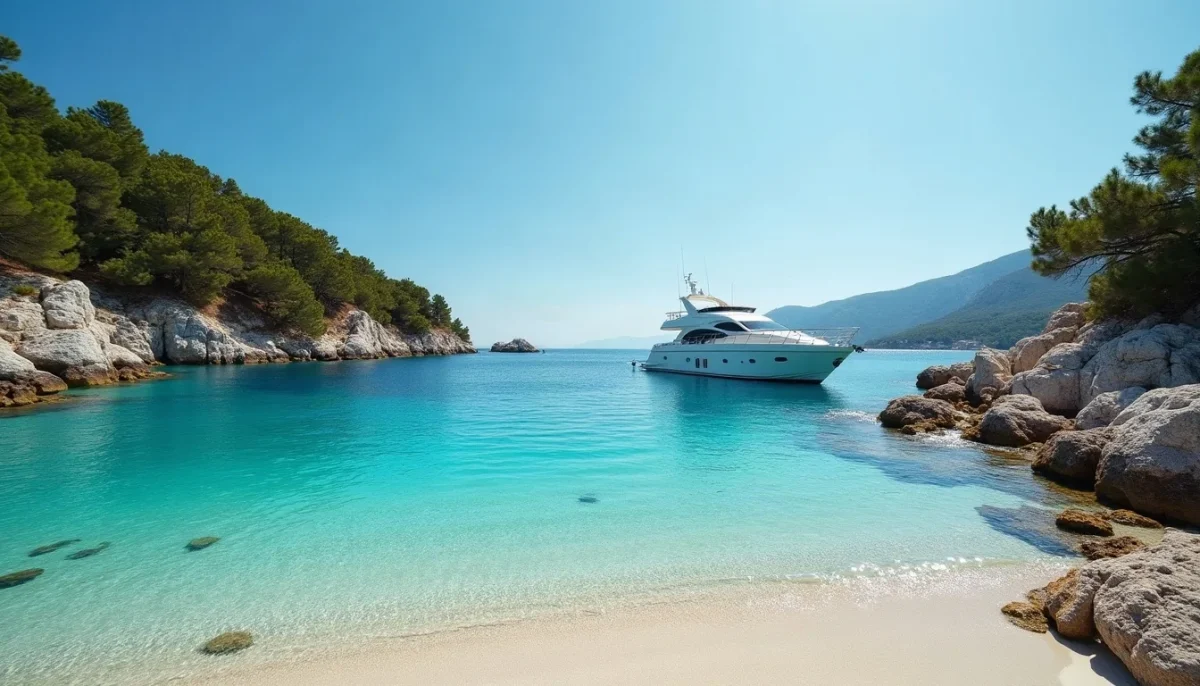
Athens has a sea on its doorstep. The Saronic Gulf begins a short drive from the city centre, and within an hour or two on the water you can be swimming off an island that feels far removed from the traffic of the capital. The harder part is choosing where to go, because the options differ a lot in distance, character and how they cope with the wind.
What the Saronic Gulf offers in a single day
The islands closest to Athens each have their own personality. According to Discover Greece, Aegina is famous for its antiquities and pistachios and is home to the 5th-century BC Temple of Aphaia on a pine-covered hill. Poros is described as the greenest of the Saronic islands, made up of two islands separated by a narrow canal. Hydra, the furthest of the classic trio, is car-free, with 18th-century captains’ houses around its harbour. Smaller islets such as Moni, known for its very clear water, and Agistri add quieter swimming stops.
On the mainland side, Cape Sounio marks the southern tip of Attica. The Greek Ministry of Culture dates the marble Doric Temple of Poseidon there to around 444-440 BC, built after an earlier temple was destroyed by the Persians before it was finished. Visit Greece notes that the temple was built to honour the god of the sea, on the craggy rocks where the horizon meets the Aegean.
Distance decides how the day feels
Every route is a trade-off between time on the move and time at anchor. Discover Greece puts a full Saronic day trip at 9 to 12 hours, and much of the difference comes from how far you travel.
- Short routes such as Aegina with Moni, or Agistri, leave most of the day for swimming and lunch at anchor.
- Middle routes such as Cape Sounio or Poros combine a landmark with a couple of bays.
- Long routes such as Hydra give you the most distinctive island, but more of the day is spent travelling.
To put numbers on it, Angel Private Yachting, an Athens operator that publishes its routes in detail, lists Aegina and Moni at 16.8 nautical miles from Marina Flisvos in Palaio Faliro and Hydra with Dokos at 36.3 nautical miles, on a day that runs from 08:00 to 18:00. Its comparison of island day trips from Athens sets out the distance and the time to the first anchorage for six routes side by side.
Let the wind choose the route
Summer in the Aegean comes with the meltemi, a dry wind from the north to northwest. WeatherOnline describes the meltemi season as running from May to October, with its peak in July and August, and explains that islands and mountain gaps channel the wind into gusty jets. Clear skies often come with it, so a bright, sunny morning can still mean a choppy crossing.
That is why good skippers settle the route on the morning of the trip rather than weeks ahead. Coastlines that face the wind can be uncomfortable on a blowy day, while bays in the lee of an island stay calm. The same operator’s route notes, for example, say that the east-facing coast around Cape Sounio can be exposed in a strong north wind, while the Aegina and Moni route sits in the lee on those days. Discover Greece puts it simply: all boat trips depend on weather conditions.
Group cruise or private boat
The classic option from Athens is the large group cruise that calls at Aegina, Poros and Hydra in one day. Discover Greece puts organised tours at around 50 to 100 euros per person, with private sailboats and catamarans costing more. A group cruise suits travellers who want to see three harbours and do not mind a fixed timetable.
A private boat changes the rhythm of the day. You choose swim stops over shopping stops, lunch can be served at anchor, and the plan can shift with the wind. If you are weighing a private Athens boat tour against a group cruise, check exactly what the price covers, such as skipper and crew, fuel, lunch, snorkelling gear and insurance, so you compare like with like.
What to pack for a day on deck
A day at sea means many hours of strong sun, plus light reflected off the water. The NHS advises sunscreen with at least SPF 30 and 4-star UVA protection, reapplied every two hours and straight after swimming, even when it is labelled water resistant. It also recommends staying in the shade when the sun is strongest and wearing a wide-brimmed hat that shades the face, neck and ears. Discover Greece adds water, swimwear and snacks to the list. A few more items make the day easier:
- a light long-sleeved top for the ride home
- soft-soled shoes that grip on a wet deck
- a dry bag for phones, cameras and documents
- some cash for a coffee or an ice cream if you go ashore
When to go
Ferries to the Saronic islands run all year, but Discover Greece names April to October as the best months, with spring and autumn singled out as particularly special and the bonus of an early or late-summer swim. Private day boats follow a similar calendar. Angel, for instance, sails from late April through October and points to May, June and September as the best months, which also sidesteps the peak of the meltemi in July and August.
The best island day trip from Athens is rarely the one with the most famous name. It is the one that fits the wind on the day, the energy of your group and how much time you want in the water rather than on the move. Decide on the pace first, shortlist two or three routes that suit it, and let the morning forecast make the final call.
Sources
- Discover Greece, A Saronic Gulf islands day trip from Athens. https://www.discovergreece.com/experiences/saronic-gulf-islands-day-trip-athens
- Hellenic Ministry of Culture and Sports, Sounion. http://odysseus.culture.gr/h/3/eh352.jsp?obj_id=2390
- Visit Greece, The Archaeological Site of Sounio. https://www.visitgreece.gr/experiences/culture/archaeological-sites-and-monuments/the-archaeological-site-of-sounio/
- WeatherOnline, Wind of the World: Meltemi. https://www.weatheronline.co.uk/reports/wind/The-Meltemi.htm
- NHS, Sunscreen and sun safety. https://www.nhs.uk/live-well/seasonal-health/sunscreen-and-sun-safety/
Αφήστε μια απάντηση